Zhang Xiaolong’s 2359 Diaries Revived in the AI Era
Zhang Xiaolong, the father of WeChat, has penned 2359 thought fragments that accurately predicted the logic behind contemporary AI products like Vibe Coding. This article decodes these ‘raw thoughts’ to reveal how product managers can blend the rigor of engineers with the sensitivity of poets, seeking answers amidst the constants of human nature and the variables of AI.

“The future composition of internet companies will be a CEO and a bunch of programming robots.”
— Zhang Xiaolong, January 10, 2011, published on Fanfou.
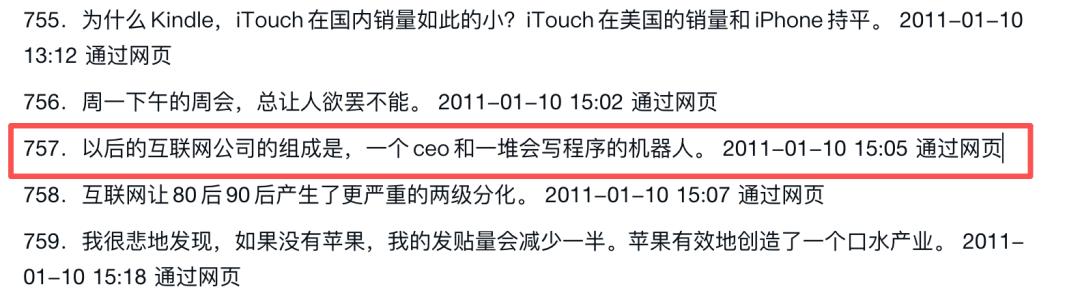 Fifteen years ago, Zhang Xiaolong predicted today’s Vibe Coding.
The term Vibe Coding was coined by Andrej Karpathy, co-founder of OpenAI and former AI director at Tesla. In February 2025, he tweeted:
“There’s a new kind of coding I call ‘vibe coding’, where you fully give in to the vibes, embrace exponentials, and forget that the code even exists.”
The 2359 Fanfou posts serve as a half-product bible and a mirror reflecting the AI era.
Having worked on hardware and software integration projects since 2001 and entering internet entrepreneurship in 2005, I’ve witnessed the evolution from PC forums to mobile apps, and now to AI. Among countless product articles, the ones I revisit are not bestsellers, but Zhang Xiaolong’s seemingly casual posts from 2010 to 2012.
 I have continuously observed the development of WeChat, noting how people use it and tracking its version releases and data growth. This is a living testament to the evolving mindset and methods of a product manager.
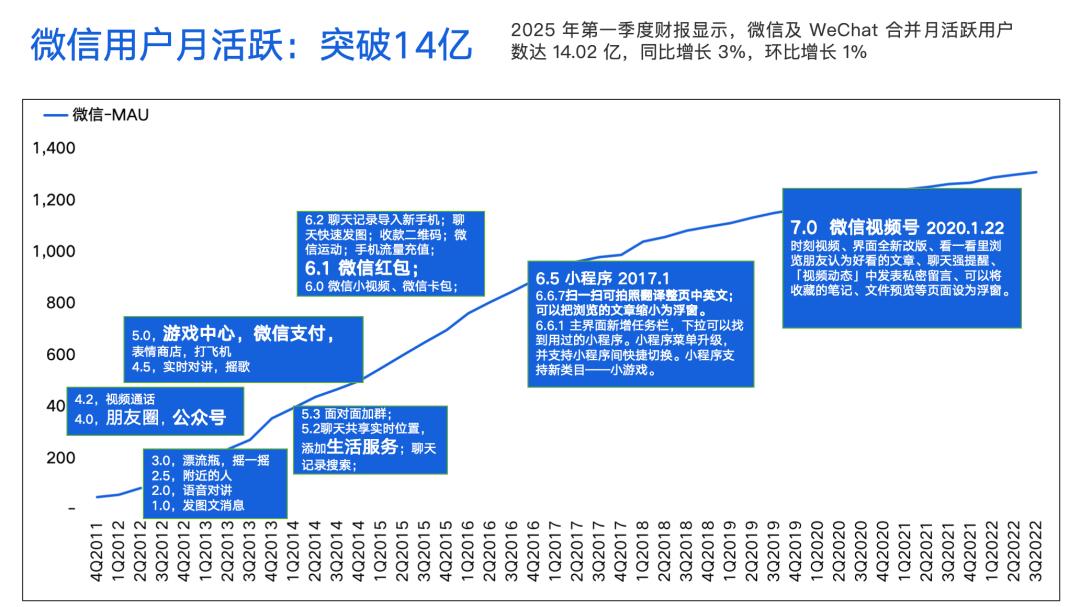 Recently, I saw friends in a WeChat group mention Zhang Xiaolong’s predictions about AI programming coming true, prompting me to revisit his Fanfou posts.
The last time I read them was ten years ago in 2016, finding it amusing enough to write a reflection titled “Everything is Wrong: After Reading Zhang Xiaolong’s 2359 Fanfou Diaries.” This time, in the midst of a flurry of AI products, agents, large models, and multimodal terms, I was left with just one word—“awe.”
This awe is not for a name but for the ability to “observe humanity.”
Many treat these 2359 posts as mere quotes, picking a few golden lines to share on social media. This is a disservice. Their true value lies in being a product manager’s raw thoughts, written in the early hours while smoking, coding, and reading “The Selfish Gene.” WeChat is merely a finished product of this raw ore.
The following content can be analyzed through the lens of four internet cycles, reflecting on this genius’s thoughts.
Understanding Zhang Xiaolong: A Blend of Poet and Engineer
Many envision Zhang Xiaolong as a “cold and distant deity.” This is a misconception. After reading the 2359 posts, you’ll find a person who embodies both a drunken poet and an engineer wielding a screwdriver.
He once wrote: “Midnight is when hormones surge, and it just so happens that Fanfou is back. Smoke, alcohol, keyboard—all the emotions from years past become tender.”
He also stated: “Farmers walk into a bar and turn around, realizing they are in the wrong place. Fanfou is also a bar.” This reflects his product positioning: some products are cafeterias, while others are bars. If you sell a bar to farmers, they will leave.
He noted: “Seeing a surge of hormones on Fanfou late at night makes me feel this country still has hope.” While this may sound superficial, it reveals his belief that the desire to express, the restlessness, and the rebellious spirit are the last hopes of a nation. This judgment transcends product evaluation; it is a life judgment.
He coldly remarked: “The test of inner strength is whether one fears the cold.” He is sensitive to “temperature,” which explains the subtle warmth in WeChat—“gentle, slow, like a lamp rather than a spotlight.”
On the day his friend suffered a stroke and became a vegetable, he wrote: “If there is tomorrow, how would you adorn your face?” The next day, when visiting his friend, he added, “For over ten years, I haven’t visited him. Tomorrow, when I see him, he will have no consciousness.” A person who uses the term “no consciousness” to describe death will create products that care beyond DAU (Daily Active Users).
To understand him, one must shed the label of “product guru.” He is a middle-aged man who talks to his shadow in the early hours, using an engineer’s hands, an artist’s eyes, a monk’s heart, and a drinker’s belly. WeChat is not his KPI; it is his shadow.
Seven Underlying Themes in the 2359 Posts
I repeatedly refer to these seven themes whenever I face product decision-making dilemmas.
First Theme: Products Have Life, Functions Do Not
“When the internet was not yet widespread, products had to rely on numerous functions to succeed. Once the internet became popular, a new product form emerged: minimalism, which helps products thrive within the larger organism of the internet and connect.”
This was written on December 15, 2010. Fourteen years later, as we develop AI agents and networks, we are still pursuing this idea. If a product cannot “live and reproduce” within a larger network, all its functions are mere corpses.
Even harsher is this statement: “A product that is predicted to succeed will inevitably fail.” This directly contradicts 90% of today’s AI market analysts. All overhyped markets will not yield significant products. True significant products emerge quietly from corners no one expected.
Second Theme: Restraint is Not a Virtue, It’s a Bottom Line
“How many functions must a product have to become garbage?”
This was written on November 27, 2010, before WeChat was born.
Later, he wrote: “After three days of heated discussions, we finally cut a feature that was already completed.” Cutting after completion is true craftsmanship; most cannot even stop the urge to add.
By 2011, he expressed: “I often impulsively want to burn all the designers and product managers.” He was not joking; he was distinguishing himself from his role—true product people must first remain vigilant about the role of “product manager.”
In today’s context, observing large model companies adding new features weekly and agent platforms launching new templates daily, you understand why he felt the need to burn.
Third Theme: Use and Leave, Not Experience, But Morality
“I believe tools on mobile phones should allow users to use and leave seamlessly. The read receipts in WhatsApp and Kik may be a negative feature.”
This was written at 2 AM on December 28, 2010, before WeChat’s first version was released. He had already deemed “read receipts” a negative feature.
Note his choice of words: “negative feature.” It’s not just unnecessary; it actively detracts from the product.
After years in product development, I increasingly believe that long user retention may indicate product shame, while quick returns may signify product dignity. Binding users is a low-level love; letting them go and still having them return is a higher form of love.
In the AI era, this principle will be violated countless times. Chat boxes, long contexts, memory systems—all these extend user engagement. If you still have a shred of product dignity, you should revisit Zhang Xiaolong’s thoughts on this.
Fourth Theme: External Value is a Cover for the Incompetent
“If we cannot help users find internal value (expression, communication, etc.), we can only add external value. External value is fine, but it does not solve the problem.”
This is a sharp critique within the product circle.
What is external value? Points, badges, levels, winning streaks, check-ins, and XP. What is internal value? Using your product transforms me into a version of myself I prefer.
Today, many AI products promote “points malls,” “membership levels,” and “invitation rewards.” They fall into the trap Zhang Xiaolong identified in 2011—if you cannot address internal value, you can only cover it up externally.
Fifth Theme: Success is Unpredictable; Product Managers are Midwives, Not Creators
“Internet products should be driven by users, not product managers. The role of a product manager is to find the right leverage and apply a bit of force.”
“Innovation is nonsense. Innovation is not a reason for decision-making. It is generally wishful thinking. What matters is understanding user psychology. The outcome is what is observed as innovation. Innovation is a matter of luck; you are merely the butterfly, and the rest is up to the clouds.”
“Programmers may not know the product’s direction, but do product personnel? They don’t either. The difference is that programmers blindly create 100 attempts, and one will survive. That survivor is the direction.”
These three statements together reveal his perspective. He never believed he could “design” a great product; he only believed he could recognize the direction chosen by life among many possibilities.
This perspective fundamentally contradicts today’s product circles obsessed with roadmaps, PRDs, demand pools, and OKRs.
Sixth Theme: Products Have a Scent; Aesthetic is Productivity
“Windows’ poor font presentation has set back the UI aesthetic standards of Chinese people by ten years.”
“Products always contain values beyond functionality. Therefore, we cannot expect trendy designs to be universally accepted.”
“A leader’s taste determines the product’s taste.”
After years in product development, I increasingly believe that the difference between two seemingly identical products lies entirely in their scent. This scent comes from the person creating the product. Today, AI products are homogenized; open ten domestic chatbots, and they all have the same flavor—because the creators share the same flavor.
Seventh Theme: The Deepest Product Insights Are Found Outside the Product Circle
He studied “The Selfish Gene” to explain why people love to tweet; he read original Yan Kai to question minimalistic design; he listened to Cui Jian and Zuo Xiao Zu Zhou to find the “truth” in music; he borrowed concepts from “Out of Control”; he inferred the director’s sincere questions from “Let the Bullets Fly”; he even derived insights from the Buddhist concept of “ignorance.”
The only thing he did not study was domestic competitors. He stated: “UI personnel are prohibited from using similar products, but PMs must learn from all.”
True product strength always grows outside the product. This iron law will only become more critical in the AI era, as the “functional differences” of all AI products will be smoothed out by competitors within six months. What remains to differentiate is the person behind the product—their readings, thoughts, loves, fears, and midnight musings.
Understanding Human Nature: Constants and Variables
This section is what I most want to write about. A seasoned product veteran traversing four internet cycles must reassess the “constants and variables of human nature” in the AI era.
Constants that AI Cannot Change
These aspects remain unchanged:
Loneliness Remains.
“A chatterbox is like a beautiful woman, constantly checking herself in the mirror.” This reflects the essence of social products. Today, those chatting with AI until 3 AM are essentially conversing with a mirror of themselves; they are not chatting with AI but with themselves reflected in AI. The loneliness unresolved by WeChat cannot be solved by AI. AI merely changes the material of the mirror.
Vanity Remains.
“Every word you say is a boast. When you want to say something, a million thoughts compete, and the most dazzling one wins, becoming that statement.” People still boast in front of AI. The prompts you give AI, the conversation screenshots you share, and the polished AI-generated content you post are all forms of boasting. The audience has merely shifted from humans to a smarter mirror, amplifying the boasting.
Greed, Hatred, and Ignorance Remain.
“Often, those who win are not the good and beautiful but the greedy, hateful, and ignorant, as they are more powerful.” This remains brutally effective in today’s AI-driven adult content, gambling recommendations, and insult training. Any entrepreneur aiming to create “good AI” must first answer: do you possess more moral strength than those creating “greedy AI”? If not, you cannot succeed.
Laziness Remains.
“People have become so lazy that unless you push articles to my desktop, open them, format them, and include recommendations from friends, I won’t read them.” This was said in 2011. Today, all our AI products’ “proactive pushes,” “pre-generated content,” and “zero prompts” cater to this laziness. Laziness will not disappear; it will only deepen.
Fear of Being Left Behind Remains.
“Thousands of people watching and discussing the latest movie at the same time reflects the same psychology: those who do not watch will be culturally marginalized, impacting their mating rights.” The essence of everyone using ChatGPT parallels the past when everyone chased after “Let the Bullets Fly.” FOMO is not a new term; it is an ancient instinct from thousands of years ago when not keeping up with the monkey troop could mean being eaten.
Desire for Internal Value Remains.
The statement about internal value still holds. AI will not eliminate the human desire for “who am I, what can I do, and who sees me”; it will only intensify it. Any AI product that fails to address internal value is doomed to be fleeting.
Variables that AI Has Changed
These are the areas truly impacted by AI:
The Boundary Between Humans and Tools Has Blurred.
Zhang Xiaolong said in post 1001: “Phones need to be smarter, providing better experiences, becoming part of the body.” In post 570, he stated: “The steering wheel is an extension of the hand; the accelerator and brake are extensions of the feet.”
He viewed tools as extensions. But AI is not an extension; it is a substitute. It does not merely press a button for you; it thinks, judges, and writes on your behalf.
This fundamentally changes the rule of “use and leave” in the AI era. Users cannot walk away. It is not the product that binds them; a part of their consciousness is outsourced. This is a challenge Zhang Xiaolong has yet to encounter.
User-Driven Products Have Partially Changed.
He stated in post 375 that products should be user-driven, with product managers applying minimal force. This principle was a golden rule in the UGC era. However, in the AI era, users may struggle to independently generate demands, as the boundaries of their needs are now explored by AI.
This does not elevate the product manager’s importance; rather, it demands greater humility. You are not designing products for users; you are collaborating with AI to help users discover what they may not even realize they want. The product manager’s role shifts from midwife to accompanying physician.
The Carrier of Internal Value Has Changed.
In the past, internal value revolved around “expression, communication, and recognition.” These still hold in social circles.
In the AI era, a new internal value emerges: the feeling of being understood. A person is willing to share with AI what they would not share with friends, not because AI is smarter, but because AI is the first non-judgmental listener of this era.
This seed was planted in 2010 when Zhang Xiaolong pondered “why people need a sounding board” and “why users say goodnight before sleeping but receive no response” (post 457). Today’s AI companionship products essentially provide that response.
The question remains whether AI can genuinely provide this understanding. This is a challenge for our generation of product people to answer.
The Notion that Users Understand Products Better than Product Managers Has Been Partially Disrupted.
In post 485, he stated: “Users understand our products better than we do.” This held true in the Web 2.0 era. In the AI era, users’ understanding of AI products is significantly lower than that of product managers, as the capabilities of AI products are ambiguous, unstable, and discontinuous.
This means that product managers must shift from “listening to users” to “teaching users.” You must design clear guidance, constraints, and mental models; otherwise, users may leave due to misunderstanding your product. This is a fundamental difference between AI products and all previous products.
Heartfelt Advice for Colleagues
At this point, I want to share some practical advice. I have experienced each of these and am grateful for the lessons learned.
Stop “researching users”; start observing them. Zhang Xiaolong’s Fanfou diaries never mention “user research”. He focused on “observation”—watching what people say at midnight dinner tables, observing what happens when a friend leaves their WeChat ID under a Weibo post (post 1095: “I know a new application scenario has been ignited”), and observing how girlfriends hold their phones. Research asks what users say; observation reveals what users live.
Start with “rogue” products before creating “good citizen” products. He noted, “Fanfou is also a bar; farmers walk in and turn around.” The early tension of a product must have a bit of “unrefined” energy. WeChat’s early features like shake, drift bottle, and nearby people all embodied this spirit. Today’s AI products are overly polished, overly aligned, and overly safe, leading to stagnation. This principle deserves deep reflection.
Be wary of seemingly “reasonable” features. Post 918 states: “Product managers often imagine themselves as users, which leads to products that appeal to those obsessed with lighting up icons.” How many features you want to add are genuinely desired by users, and how many stem from your own compulsions as a product manager? Distinguishing this requires the courage to reflect.
Focus on niche products rather than mass appeal. Post 898 states: “Creating niche products is the exciting thing.” Post 934 states: “The future world should be one where everyone creates products for ten users.” These two insights are golden in the AI era. The greatest strength of AI is serving niche extremes. The future will not see one winner among 100 products; instead, 100,000 ten-user products will form a new ecosystem.
Learn to battle your “correct judgments.” Post 1000 states: “I believe people do not enjoy chatting on phones, yet I now chat happily. Thus, my judgments are often wrong.” This foreshadowed his later notion of “everything I say is wrong.” A product manager’s humility is not merely verbal; it involves validating whether what seems correct is, in fact, wrong.
Avoid always turning to Zhihu; spend more time in vibrant places. Post 1770 states: “Product personnel flock to Zhihu, which is incorrect. Zhihu’s content is dry; they should spend more time on Fanfou, where the content is lively.” Today, this translates to: “Stop only reading product analysis on public accounts; spend time in Bilibili comment sections, Xiaohongshu rants, and chaotic forums.” Lively data has humanity; dry summaries are mere dogma.
A Message for Everyone Beyond Product Managers
These 2359 posts are not solely for industry peers. They resonate most with ordinary people in ways unrelated to products.
Every time you scroll your phone, it’s not your choice; you are being pulled in by something. Understanding this is the first step to true freedom.
Simplicity is not easy. Post 939 states: “A simple life seems very difficult.” Simplicity does not mean less; it means having the confidence to say, “I don’t need that.”
Do not use “busyness” to escape yourself. Post 449 states: “When one has no immediate worries, they will have distant concerns. When one has distant concerns, they will have anxiety.” Anxiety will not diminish by doing more; it will vanish when you see yourself clearly.
Be honest about death. The words he wrote the night his friend became a vegetable are ones I revisit annually. “Living drunkenly seems better described as ‘drunkenly living without dreaming of death.’” Most people are awake but do not dream.
Conclusion: He Wasn’t Just Writing Microblogs; He Was Crafting a Way of Life
Looking back, when he typed “New account on the road” on November 26, 2010, he had no idea this account would yield 2359 posts. He certainly did not anticipate that years later, a product veteran in the AI era would read these words in the early hours of insomnia and be left with just one thought—
In product development, it’s not just about the product; it’s about embodying a way of living.
Zhang Xiaolong wrote in post 1702: “Product people are those standing beside God.” This is not arrogance; it is responsibility. The products you create will change how billions communicate, love, feel lonely, and fall asleep. Standing beside God means you must think one step further: do not let users become more frivolous, anxious, or lonely because of what you create.
The AI era has just begun. The uncertainties our generation of product people face will be tenfold greater than those he encountered. Yet, some things will never change:
Humans are lonely. Humans are greedy. Humans are vain. Humans crave understanding. Humans desire simplicity yet resist it. Humans will complain while using, quit while indulging, and shout to leave while returning.
Whoever first makes space for these people in their heart will create the next WeChat.
And Zhang Xiaolong merely started a decade earlier.
Comments
Discussion is powered by Giscus (GitHub Discussions). Add
repo,repoID,category, andcategoryIDunder[params.comments.giscus]inhugo.tomlusing the values from the Giscus setup tool.